FIFA has received widespread praise after quietly introducing a thoughtful change to its “Superior Player of the Match” award presentation during the World Cup 2026, removing alcohol sponsor branding for Muslim players and others who request it.
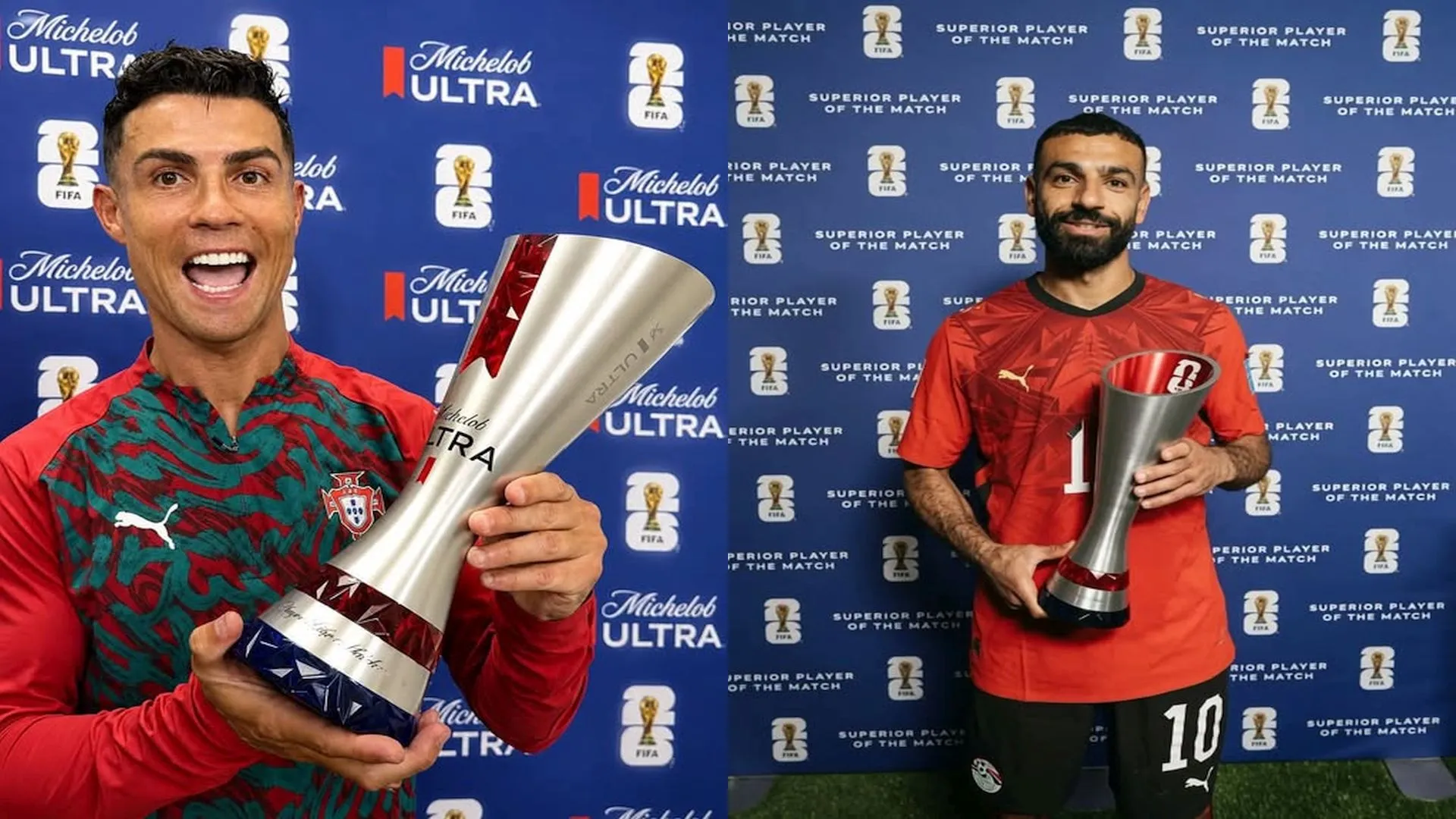
The award is officially sponsored by Michelob ULTRA, with the beer brand’s logo typically displayed on the trophy, presentation backdrop and official post-match photographs.
However, FIFA has made a subtle adjustment by providing a non-branded version of the award for selected players, replacing the sponsor’s logo with a neutral “Superior Player of the Match” design alongside FIFA World Cup branding.
The initiative has been used for several Muslim footballers during the tournament, including Mohamed Salah, Achraf Hakimi, Ismael Saibari, Emam Ashour, Ali Olwan, Ramin Rezaeian, Mahmoud Abunada, and Yan Diomande, allowing them to receive the honour without being associated with an alcohol brand.
According to a FIFA spokesperson, the organisation offers a logo-free trophy and backdrop upon request by the selected player. The same option is also available for players who are below the legal drinking age or anyone who prefers not to be linked to alcohol sponsorship.
The move has been widely applauded across social media, with many fans praising FIFA for showing respect towards the religious beliefs and cultural values of Muslim players while maintaining its commercial partnership with the tournament sponsor.
The issue of alcohol-sponsored awards involving Muslim players is not new. During the 2018 World Cup, Egypt goalkeeper Mohamed El-Shenawy declined the traditional Player of the Match prize because it was associated with an alcohol sponsor, sparking global discussion about accommodating religious beliefs in football.
Rather than altering the sponsorship agreement entirely, FIFA’s latest approach offers a practical compromise—preserving commercial commitments while allowing players to receive one of football’s most prestigious individual honours in a manner that respects their personal convictions.
The decision has been hailed as a positive example of inclusivity at the world’s biggest football tournament, demonstrating that sporting excellence and respect for cultural diversity can go hand in hand.
You may be interested in
![Nike Academy Team (30L) Football Backpack - Black [DV0761-011]](https://d3lmgsai2rsy7d.cloudfront.net/astro-products/2026/07/20/6a5d9bd674e625.29537053-sg-11134201-8259h-mqh22enzryteee)
Nike Academy Team (30L) Football Backpack - Black [DV0761-011]
![Nike Men's Vomero 18 Road Running Shoes - White [HM6803-109]](https://d3lmgsai2rsy7d.cloudfront.net/astro-products/2026/05/25/6a140990e354f8.62743914-sg-11134201-820l8-mnfoteyofhu096)
Nike Men's Vomero 18 Road Running Shoes - White [HM6803-109]
![PUMA ULTRA 5 PLAY FG/AG Adult Spikes Apple Green Grass Football 10768903 [Le Mai.com]](https://d3lmgsai2rsy7d.cloudfront.net/astro-products/2026/05/25/6a1409975b2bf7.52020222-tw-11134207-7rash-m1o0n55dhn2j83)
PUMA ULTRA 5 PLAY FG/AG Adult Spikes Apple Green Grass Football 10768903 [Le Mai.com]
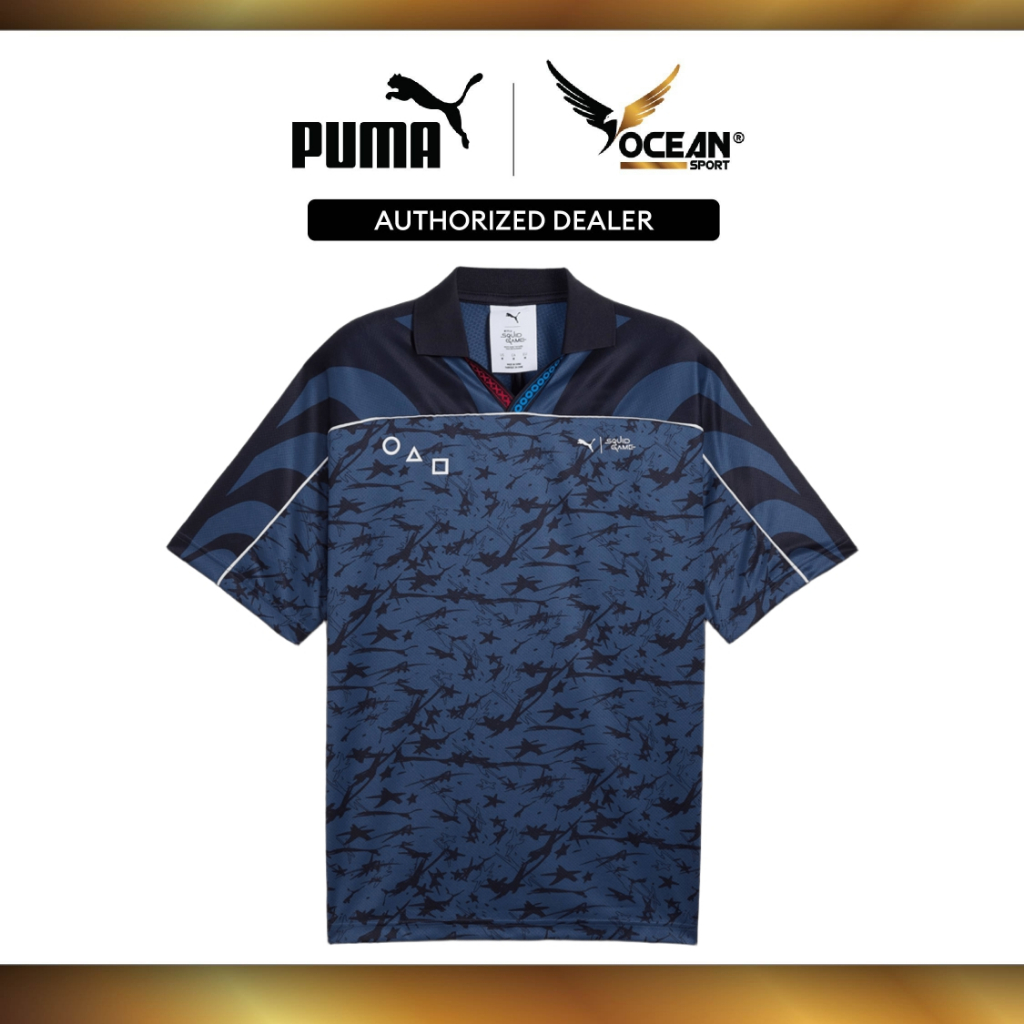
PUMA X SQUID GAME AOP Relaxed Football Jersey (New Navy) 63070716